Nothing to Wear? Rose Alumnus Creates an App for That!
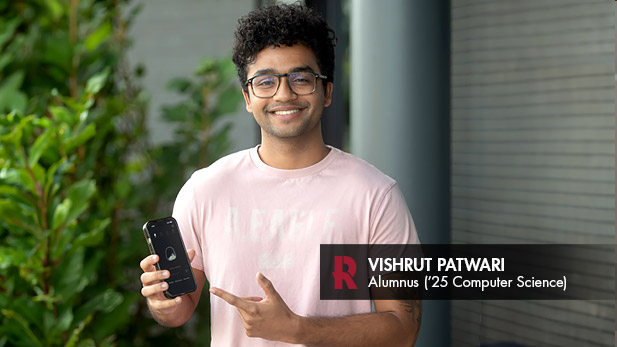
Vishrut Patwari, a 2025 computer science alumnus, has developed an app that serves as a personal stylist using the clothes already in your wardrobe. Launched in July 2026, Varnesa uses artificial intelligence to learn a user’s personal style from photos of their clothing.
Vishrut Patwari has a solution for one of fashion’s most common dilemmas: standing in front of a full closet and feeling like you have nothing to wear. The 2025 computer science graduate turned that idea into Varnesa, an app that serves as a personal stylist using the clothes already in your wardrobe.
Launched in July 2026, Varnesa uses artificial intelligence to learn a user’s personal style from photos of their clothing. Users can upload photos from their camera roll or snap pictures of items on the spot. Varnesa identifies each item’s color, style and overall aesthetic, then creates outfit recommendations based on what the user already owns. Need an outfit for a job interview or dinner date? Ask Varnesa. Don't like the suggestion? Swipe for another option.
Patwari wanted to combine technology and fashion without losing the individuality that makes personal style meaningful.
“Fashion is very human and we want something that’s our own personal style,” says Patwari. “I wanted to leverage AI but wanted to create something that stays true to fashion as an expression of yourself. Varnesa focuses on your style DNA, so all the recommendations it pulls are from your clothes. So, the outfit is authentically you.”
That focus on what people already own is one of Varnesa’s biggest differentiators. Rather than encouraging users to buy something new, the app helps them see new possibilities in the clothes already hanging in their closets.
“Many competitors are showing you what you don’t own or how you’re not stylish enough,” says Patwari. “With Varnesa, more often than not, you do have it all in your closet. So, this app allows the user to capitalize on what they have and save money by not buying additional clothes.”
Patwari spent 10 months developing Varnesa while working as a software engineer for SEP, a software development company in Carmel, Indiana, founded by Rose-Hulman alumni. Since its July launch, the app has gained users primarily through word of mouth. Patwari is using the early launch period to study how people interact with Varnesa and identify ways to make the app more useful.
One question he is exploring is how often people would use a fashion app.
“Many people think it's an amazing idea, but they only use it a few times a week,” he says. “Yet fashion is something we do every day. I’m trying to understand different customer profiles and having customer conversations about what they find valuable and what would make them use it every day.”
That willingness to test an idea, learn from users and keep improving it reflects a mindset Patwari began developing at Rose-Hulman.
Patwari describes himself as an entrepreneur at heart. Born in San Diego, he moved to India with his family before returning to the United States to attend Rose-Hulman. He participated in ESCALATE, the entrepreneurial living-learning community for first-year students who live together in a common residence hall. He found a natural fit in the community, as well as in entrepreneurship classes with close friends who also had big ideas and went on to create startups. He was also a member of the Delta Rose Sigma business fraternity and briefly served as its vice president.
“I’ve always had the entrepreneurial bug,” he says. “I was the kid with Steve Jobs posters in my room and had a new idea every other day. But I always started and then gave up on the ideas. One of the most important lessons I learned from Rose is stick with projects and not walk away no matter what. That mindset helped me push through the 10 months I spent developing Varnesa.”
That support from Rose-Hulman extended beyond the classroom and entrepreneurial programs.
“One thing that always stood out to me during my time at Rose was how genuinely invested the college is in students and what they go on to build. That support was a real part of my experience there.”
The name Varnesa also reflects Patwari’s philosophy. The name is rooted in “varna,” a Sanskrit term associated with expression or identity, which he found to be an appropriate connection for an app built around individual style.
Ultimately, Patwari sees Varnesa as more than a digital closet or personal stylist. His long-term goal is to create what he calls a “one-stop fashion ecosystem,” with features that allow users to connect with friends, explore other people’s styles and even take inspiration from celebrities and influencers.
“I envision a person walking down the street and they encounter someone who comments on their jacket, for example. And the next sentence you’d hear is, ‘Can I get your Varnesa handle?’ So, in addition to digitizing your own closet and pulling recommendations, you can also see what your friends are wearing and their styles. If there’s a celebrity or influencer you look up to, you can use Varnesa to see how they’re styling themselves.”
He also sees potential for Varnesa to help people navigate the social side of fashion.
“Even something as simple as you’re going out on a first date. You can get a sense of that person’s style and Varnesa can help you dress for the occasion. For example, if I use Varnesa to figure out that my date dresses in an Ivy League-inspired style, I won’t show up to the first date wearing my New Balance shoes.”